

Understanding Space Law and Governance in KY
An article by Ken Human, former Chief Counsel at NASA
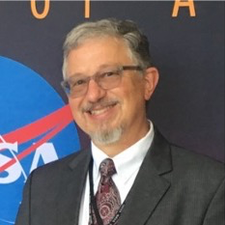
Research and development in space is already at the cutting edge of discovery and scientific breakthroughs. Professionals including doctors, lawyers and engineers are seeing their professions challenged by exciting new information and insights provided by space exploration and space science. Kentucky should jump on board now and maximize their understanding of space law and governance to help support and boost Kentucky enterprises engaged in this vital sector of our state economy.
In the next few years, American and Chinese astronauts will land in and near areas of special interest on the moon. Will these more valuable and useful areas of the Moon be managed as an “international commons” (like Antarctica or deep ocean sea beds on Earth) or will it be a “free for all” involving attempts at national appropriation? Government and commercial activities in earth orbit, cislunar space, and even those on the moon’s surface will continue to expand and develop. Lawyers will play a key role in navigating a myriad of special legal considerations, options and stratagems enabling Kentucky businesses to succeed.
There have been some stunning space-related discoveries and developments recently. In June NASA announced that the Perseverance rover on Mars discovered macromolecular carbon (large complex organic molecules) in mudstone rocks at the “Bright Angel” location in Jezero Crater’s ancient river channels. This is the first time complex organic carbon has been discovered on undrilled Martian rock surfaces. This is not indisputable proof that life once existed on ancient Mars but the evidence that the chemical ingredients for life were widespread across a warmer and wetter Mars continues to mount. If only we could safely bring some of these specimens back to terrestrial containment facilities, we could test them for a definitive signature of past microbial life. On the other hand, now there is more reason and intrigue than ever before, luring humans to go to Mars to examine and determine, first-hand, whether life once existed there.
It is not impossible that life may still exist on Mars, perhaps underground near thermal vents, but assuming it doesn’t, the proof that life once bloomed there long ago will raise big and profound questions. Did Martian life evolve independently from a separate origin or is life on Earth and Mars linked to a common origin? This is only one of many biology questions with legal and governance implications. Perhaps the biggest is how human reproduction and embryotic development in settlements on the Moon and Mars will or could be affected by the microgravity environment. There will be some people who will be willing to “just let evolution take its course,” and there will be others who seek to control, regulate and/or preclude such possibilities. How will understanding of the scientific facts influence policy and governance?
Closer to home, earlier this year, Artemis II looped around the far side of the moon on a historic 10-day mission with a crew of 4. It was the first time humans ventured into deep space in over 50 years. The mission carried “organ on a chip” devices, or organ chips, to study the impacts of deep space radiation and microgravity on human tissue. The chips contained bone marrow cells grown from the actual Artemis II astronauts. Space Tango, a Kentucky company designed the complex automated technology for this Virtual Tissue Analog Response (AVATAR) experiment. By studying cellular and DNA damage caused by exposure to the increased radiation and microgravity of the Orion capsule environment during the mission, scientists may be able to better grasp the body’s responses to chemotherapy and better understand bone marrow function on Earth.
Over the past several years, several Kentucky companies have partnered with researchers to fly human brain and other organoids in weightlessness aboard the International Space Station. Organoids are mini, lab-grown living masses of human cells that interact, grow, and can survive for months or even longer. Organoids mimic the structure and function of real human organs and can serve as human-derived models that enable biological experiments and testing. Medical researchers want to study these tissue cultures in space because the microgravity environment allows cells to self-organize naturally and accelerates aging. Using organoids, scientists can model neurodegenerative diseases like Alzheimer’s and Parkinson’s, and even brain tumors, much faster than is possible on Earth.
Preliminary experiments and research suggest that there may be a link between certain neurological symptoms induced by exposure to the space environment and the use of particular types of drugs to treat and reverse the underlying cause of the symptoms. A recent “Space Brief” issued by Kentucky Space Futures, displays a picture of a young girl who received medicine that was “fully developed in brain organoids” on the International Space Station. Legal ambiguities regarding Intellectual Property (IP) created in space could, however, complicate both a business model for marketing these drugs as well as the regulatory process for selling space-manufactured pharmaceuticals and biomaterials.
Kentucky needs to protect and stimulate the growth of its rapidly growing aerospace and microgravity sectors. The national and international business climate is largely beyond our control but Kentucky can build on what has already been developed in the State, including existing businesses already working in the space frontier, and prepare for an even stronger position in the space economy. By some definitions Kentucky’s booming aerospace economy includes over 100 facilities employing more than 23,000 workers. Kentucky’s aerospace sector ranks second in the nation for aerospace exports, which reached $23 billion in 2025.
The success and scalability of these state businesses both in low-Earth orbit and the Moon, however, depend on how national and international governance address liability, IP, resource extraction, and commercialization, amid numerous issues of concern such as management of the growing swarm of satellites in Earth orbit and the escalating threat that space debris poses to the orbital environment. Evolving international treaties such as the Artemis Accords and other national space policies will determine the legality of commercializing space-based manufacturing, intellectual property rights, and regulatory compliance. As Kentucky works to establish itself as an advanced aerospace manufacturing and microgravity research powerhouse, its space industry must remain mindful of the challenging and constantly changing global space regulatory environment.
Currently none of the three ABA accredited law schools in Kentucky offer dedicated space law courses. In fact, there are only two law schools in the US that currently offer specialized Master of Laws (LLM) degrees related to Space law, the University of Mississippi School of Law and the University of Nebraska College of Law. Aspiring Kentucky students, however, can find foundational courses or dedicated concentrations of space law and governance at many schools outside Kentucky.
In the meantime, Kentucky continues to build a dedicated core of creative professionals, students and lawyers, who are attuned to the rapidly developing space industry. A statewide initiative has been launched, Kentucky Space Futures, designed to increase awareness and promote growth across Kentucky’s space-related sectors, including science, technology, business, education and law. On September 11, Kentucky Space Futures will welcome and host a guest speaker, Michelle Hanlon. Professor Hanlon is a leading American space lawyer and space law professor. She is the co-founder, president and chief executive officer of For All Moonkind, and Executive Director of the Center for Air and Space Law at the University of Mississippi School of Law. Stay tuned for updates and more information on this exciting event.